2026 Market Outlook: Bull Market vs. Geopolitical Polarization
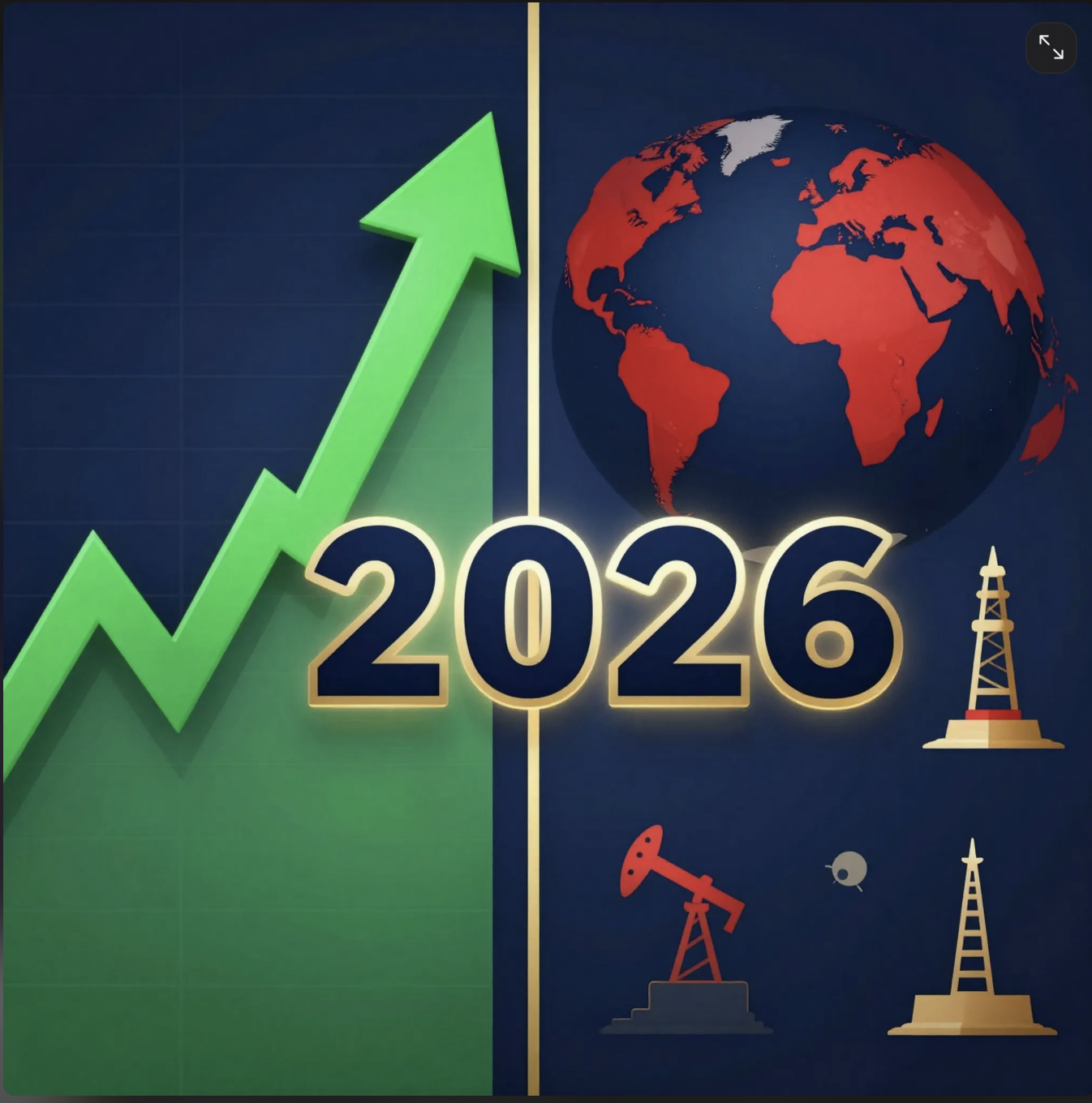
As we navigate into 2026, investors face a critical inflection point. On one side, robust corporate earnings, AI-driven productivity gains, and resilient consumer spending fuel bull market momentum. On the other, intensifying geopolitical polarization—from Middle East tensions to great power competition—threatens to derail risk assets.
This 2026 Market Outlook examines the tug-of-war between these opposing forces, analyzing whether bullish fundamentals can withstand geopolitical headwinds, which sectors stand to win or lose, and how investors should position portfolios for this high-stakes environment.
Table of Contents
- The Bull Market Case: What’s Driving Optimism
- Geopolitical Polarization: Key Risk Factors for 2026
- The Great Divide: Regional Market Divergence
- Sector Analysis: Winners and Losers in a Polarized World
- Macroeconomic Backdrop: Rates, Inflation, and Growth
- Scenario Analysis: Three Paths for 2026
- Portfolio Positioning Strategies
- Key Catalysts & Dates to Watch
- Frequently Asked Questions
The Bull Market Case: What’s Driving Optimism:
Despite headwinds, several structural forces support continued equity strength in the 2026 Market Outlook.
Fundamental Pillars of the Bull Market
| Driver | Status | 2026 Outlook |
|---|---|---|
| Corporate Earnings | S&P 500 EPS growth +12% YoY | Moderate deceleration to +6-8% but still positive |
| AI & Productivity | Tech capex surge, efficiency gains | Broadening beyond mega-cap to mid-caps |
| Labor Market | Unemployment ~4.0% | Gradual softening but no collapse expected |
| Consumer Balance Sheets | Excess savings depleted but wages growing | Resilient spending, shift to services |
| Financial Conditions | Easing from 2024-2025 tightening | Neutral to accommodative if Fed cuts continue |
Valuation Context
123S&P 500 Forward P/E: ~21x (above 10-year avg of 17x)Shiller CAPE Ratio: ~34x (elevated but not extreme vs. 2000/2021)Equity Risk Premium: ~3.8% (below historical avg of 4.5%)
Key Insight: The bull market is mature but not exhausted. Earnings growth, not multiple expansion, must drive returns from here.
Technical Picture
- S&P 500: Trading above 200-day MA; momentum intact
- Market Breadth: Improving beyond mega-cap tech (equal-weight S&P catching up)
- Volatility: VIX averaging 14-16 (complacent but not extreme)
Geopolitical Polarization: Key Risk Factors for 2026:
While fundamentals support equities, geopolitical polarization represents the primary threat to the 2026 Market Outlook.
Critical Flashpoints
| Region | Issue | Market Impact Probability |
|---|---|---|
| Middle East | Iran-Israel tensions, Strait of Hormuz risk | HIGH – Oil supply disruption |
| Eastern Europe | Ukraine conflict continuation, NATO-Russia friction | MEDIUM – Energy/commodity volatility |
| Indo-Pacific | Taiwan Strait, South China Sea, North Korea | HIGH – Tech supply chain disruption |
| Trade Wars | US-China tariffs, EU protectionism | MEDIUM-HIGH – Global growth drag |
| Energy Transition | Critical mineral competition, OPEC+ dynamics | MEDIUM – Commodity price swings |
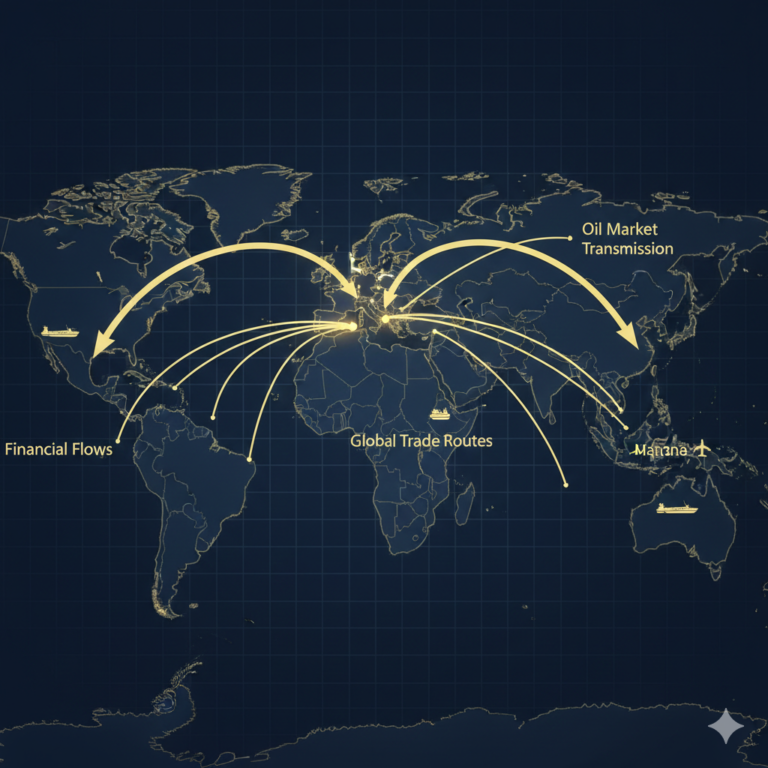
Transmission Channels to Markets
12345Geopolitical Shock →├─ Energy Prices ↑ → Inflation ↑ → Central Bank Pause/Hike → Equities ↓├─ Supply Chain Disruption → Corporate Margins ↓ → Earnings ↓ → Equities ↓├─ Risk Aversion ↑ → Volatility ↑ → Risk Premium ↑ → Valuation Compression└─ Currency Volatility → EM Stress → Capital Flight → Global Liquidity Tightening
Historical Context
- 2022: Russia-Ukraine war → S&P 500 -19%, Oil +40%
- 2018: US-China trade war → S&P 500 -6% (Q4), Volatility spike
- 1973: Oil embargo → Stagflation, bear market
2026 Risk: Multiple simultaneous flashpoints increase correlation and systemic risk.
The Great Divide: Regional Market Divergence:
The 2026 Market Outlook is not uniform—geopolitical polarization creates stark regional winners and losers.
Regional Performance Forecasts
| Region | 2026 Equity Outlook | Key Drivers | Risks |
|---|---|---|---|
| United States | +6-10% (modest gains) | AI leadership, strong consumer, dollar strength | Valuation stretch, political uncertainty |
| Europe | +3-7% (underperform US) | ECB easing, recovery in manufacturing | Energy dependence, geopolitical exposure |
| China | -5% to +5% (high uncertainty) | Stimulus measures, property stabilization | Demographics, debt, US tensions |
| Japan | +5-8% (structural reform story) | Corporate governance, wage growth, weak yen | BoJ policy normalization risk |
| India | +10-15% (outperformer) | Demographics, digitalization, manufacturing shift | Valuation premium, infrastructure gaps |
| Emerging Markets (ex-China) | +8-12% (selective) | Commodity exporters benefit, nearshoring | Dollar strength, debt sustainability |
The Deglobalization Trade
Winning Regions:
- ✅ North America: Nearshoring, energy independence
- ✅ India/Southeast Asia: Manufacturing relocation, demographic dividend
- ✅ Commodity exporters (LatAm, parts of Africa): Terms of trade improvement
Losing Regions:
- ❌ Export-dependent Europe: Manufacturing slowdown, energy costs
- ❌ China: Trade barriers, capital outflows, aging population
- ❌ High-debt EMs: Dollar strength, refinancing risk
IMF World Economic Outlook or World Bank regional forecasts
Sector Analysis: Winners and Losers in a Polarized World:
The 2026 Market Outlook favors selective sectors aligned with geopolitical and technological megatrends.
Sector Performance Matrix
| Sector | 2026 Outlook | Rationale | Top Picks |
|---|---|---|---|
| Technology (AI/Semiconductors) | 🟢 Overweight | AI capex cycle, productivity gains, onshoring | NVDA, TSMC, ASML, domestic chipmakers |
| Defense & Aerospace | 🟢 Overweight | Geopolitical tensions, NATO spending targets | LMT, RTX, NOC, European defense contractors |
| Energy (Oil & Gas) | 🟡 Neutral | Supply constraints vs. demand uncertainty | Integrated majors, LNG exporters |
| Renewables/Clean Tech | 🟢 Overweight | Policy support, energy security imperative | Solar, wind, grid infrastructure, uranium |
| Healthcare | 🟢 Overweight | Defensive, aging demographics, innovation | Biotech, medtech, GLP-1 drugmakers |
| Financials | 🟡 Neutral | Rate sensitivity, credit risk mixed | Regional banks (caution), insurers (positive) |
| Consumer Discretionary | 🔴 Underweight | Margin pressure, consumer fatigue | Avoid highly leveraged retailers |
| Real Estate | 🔴 Underweight | Higher-for-longer rates, refinancing wall | REITs vulnerable except data centers/industrial |
| Materials | 🟡 Neutral | Critical minerals bullish, industrials mixed | Copper, lithium, rare earths |
Thematic Investment Opportunities
- Reshoring/Nearshoring: Industrial real estate, automation, logistics
- Energy Security: LNG infrastructure, nuclear, grid modernization
- Supply Chain Resilience: Warehousing, freight, inventory management tech
- Cybersecurity: Critical infrastructure protection, sovereign data
- Food Security: Agtech, fertilizer, water infrastructure
Key Insight: In a polarized world, national security and supply chain resilience trump pure efficiency—invest accordingly.
Macroeconomic Backdrop: Rates, Inflation, and Growth:
The macro environment sets the stage for the 2026 Market Outlook.
Central Bank Policy Trajectory
| Central Bank | Current Stance | 2026 Projection | Market Impact |
|---|---|---|---|
| Federal Reserve | Easing cycle (cuts) | Fed Funds: 3.5-4.0% by year-end | Supportive for equities if soft landing |
| ECB | Easing faster than Fed | Deposit Rate: 2.0-2.5% | EUR weakness, European equity support |
| Bank of Japan | Gradual normalization | Policy Rate: 0.5-1.0% | JPY volatility, carry trade unwinding risk |
| PBOC | Easing to support growth | LPR cuts, reserve ratio reductions | CNY pressure, capital outflow risk |
Inflation & Growth Scenarios
1234567891011121314151617Baseline (60% probability):• Global Growth: +2.8% (below trend but stable)• US GDP: +1.8-2.2%• Core PCE: 2.3-2.6% (sticky but declining)• Unemployment: 4.2-4.5%Bear Case (25% probability):• Global Growth: +1.5% (near recession)• US GDP: +0.5-1.0%• Core PCE: 2.8-3.2% (re-acceleration risk)• Unemployment: 4.8-5.5%Bull Case (15% probability):• Global Growth: +3.5% (above trend)• US GDP: +2.5-3.0%• Core PCE: 1.8-2.2% (faster disinflation)• Unemployment: 3.8-4.0%
Key Macro Risks
- Sticky Services Inflation: Wage growth + shelter costs delay Fed cuts
- Fiscal Dominance: High debt levels constrain policy options
- Credit Stress: Commercial real estate, leveraged loans, private credit
- Dollar Strength: EM debt servicing pressure, global liquidity drain
Investment Implication: The bull market can continue IF the Fed achieves a soft landing. Geopolitical shocks that reignite inflation are the primary threat.
Scenario Analysis: Three Paths for 2026:
Given the tension between bull market momentum and geopolitical polarization, we model three scenarios for the 2026 Market Outlook.
Scenario 1: “Muddling Through” (Base Case – 55% Probability)
Assumptions:
- Geopolitical tensions remain elevated but contained
- Fed cuts rates 2-3x (75-100 bps total)
- S&P 500 EPS growth +6-8%
- Oil $75-90/bbl range
- No major recession
Market Impact:
12345S&P 500: +6-10% (total return ~8-12% with dividends)10Y Treasury: 3.8-4.2%USD: Stable to slightly weakerCredit Spreads: Tight to neutralVolatility (VIX): 14-18 average
Portfolio Strategy: Balanced growth tilt, quality bias, moderate risk-taking.
Scenario 2: “Geopolitical Shock” (Bear Case – 30% Probability)
Assumptions:
- Middle East escalation disrupts oil supply
- US-China tensions trigger tech decoupling acceleration
- Oil spikes to $110-130/bbl
- Inflation re-accelerates to 3.5%+
- Fed pauses or hikes
- Global growth slows to +1.5%
Market Impact:
12345S&P 500: -10 to -20% (correction/bear market)10Y Treasury: 4.5-5.0% (inflation premium)USD: Strong (safe haven)Credit Spreads: Widen 100-150 bpsVolatility (VIX): 25-35 spike
Portfolio Strategy: Defensive positioning, increase cash, long volatility, safe havens (gold, Treasuries), reduce EM/cyclical exposure.
Scenario 3: “Goldilocks Breakout” (Bull Case – 15% Probability)
Assumptions:
- Geopolitical tensions de-escalate
- AI productivity boom accelerates
- Fed cuts 4-5x (125-150 bps)
- Inflation falls to 1.5-2.0%
- Strong global growth (+3.5%)
- Corporate margins expand
Market Impact:
12345S&P 500: +15-25% (multiple expansion + earnings growth)10Y Treasury: 3.2-3.6%USD: Weaker (risk-on)Credit Spreads: Very tightVolatility (VIX): 10-14
Portfolio Strategy: Aggressive growth, cyclicals, small-caps, EM, leverage into strength.
Probability-Weighted Expected Return
1234567Base Case (55%): +8% returnBear Case (30%): -15% returnBull Case (15%): +20% returnExpected Return = (0.55 × 8) + (0.30 × -15) + (0.15 × 20) = 4.4 - 4.5 + 3.0 = +2.9% (base equity risk premium)
Key Takeaway: The risk/reward is asymmetric to the downside. Position defensively while maintaining growth exposure.
Portfolio Positioning Strategies:
How to navigate the 2026 Market Outlook given the bull market vs. geopolitical polarization tension.
Strategic Asset Allocation (Base Case)
| Asset Class | Allocation | Rationale |
|---|---|---|
| Global Equities | 55-60% | Growth exposure with quality tilt |
| Fixed Income | 25-30% | Duration for recession hedge, yield pickup |
| Alternatives | 10-15% | Diversification (gold, commodities, private markets) |
| Cash | 5-10% | Dry powder for volatility opportunities |
Tactical Overweights
✅ Sectors: Technology (AI), Defense, Healthcare, Energy Infrastructure
✅ Regions: US (quality), India, Japan, select EM commodity exporters
✅ Factors: Quality, Momentum, Low Volatility
✅ Themes: Reshoring, Energy Security, Cybersecurity, Aging Demographics
Tactical Underweights
❌ Sectors: Commercial Real Estate, Highly Leveraged Consumer, Traditional Retail
❌ Regions: China (structural headwinds), Highly Indebted EMs
❌ Factors: High Beta, Speculative Growth, Value Traps
Risk Management Toolkit
| Tool | Purpose | Implementation |
|---|---|---|
| Stop-Losses | Limit downside | 8-12% trailing stops on individual positions |
| Options Hedges | Tail risk protection | S&P 500 put spreads, VIX calls |
| Diversification | Reduce correlation | Gold (5-10%), Treasuries, uncorrelated alts |
| Rebalancing | Discipline | Quarterly or 5% threshold bands |
| Scenario Planning | Preparedness | Pre-defined actions for each scenario |
Sample Portfolio Construction
Conservative (Risk-Averse):
- 40% Equities (quality dividend growers)
- 40% Fixed Income (intermediate Treasuries, IG credit)
- 15% Alternatives (gold, managed futures)
- 5% Cash
Moderate (Balanced):
- 60% Equities (blend of growth/value, US/international)
- 25% Fixed Income (duration + credit)
- 10% Alternatives (gold, commodities, REITs)
- 5% Cash
Aggressive (Growth-Oriented):
- 75% Equities (tilt to tech, small-caps, EM)
- 15% Fixed Income (shorter duration, high yield)
- 5% Alternatives (crypto, private equity)
- 5% Cash
⚠️ Warning: Adjust allocations based on your risk tolerance, time horizon, and liquidity needs. Past performance ≠ future results.
Key Catalysts & Dates to Watch {#key-catalysts-dates-to-watch}
Stay ahead of the 2026 Market Outlook with this catalyst calendar.
Q1 2026
| Date | Event | Potential Impact |
|---|---|---|
| Jan 20 | US Presidential Inauguration | Policy clarity, market direction |
| Feb 15 | Q4 2025 Earnings Season Peak | Guidance for 2026, AI capex updates |
| Mar 18-19 | FOMC Meeting | Rate decision, dot plot updates |
| Ongoing | Middle East Tensions | Oil price volatility, risk sentiment |
Q2 2026
| Date | Event | Potential Impact |
|---|---|---|
| Apr 15 | US Tax Day | Liquidity drain, volatility uptick |
| May 15 | Q1 2026 Earnings | Consumer health, margin trends |
| Jun 17-18 | FOMC Meeting | Mid-year policy assessment |
| Jun 30 | End of H1 | Portfolio rebalancing flows |
Q3 2026
| Date | Event | Potential Impact |
|---|---|---|
| Jul 15 | Q2 Earnings Season | AI monetization, tech spending |
| Aug Jackson Hole | Fed Symposium | Forward guidance, policy framework |
| Sep 16-17 | FOMC Meeting | Pre-election positioning |
| Ongoing | Taiwan/China Tensions | Tech supply chain risk |
Q4 2026
| Date | Event | Potential Impact |
|---|---|---|
| Nov 3 | US Midterm Elections | Political gridlock vs. policy shifts |
| Nov 15 | Q3 Earnings | Year-end guidance, 2027 outlook |
| Dec 15-16 | FOMC Meeting | Year-end policy, 2027 projections |
| Dec 31 | Year-End | Tax-loss harvesting, window dressing |
Geopolitical Watchlist (Ongoing)
- 🔴 Strait of Hormuz: Any disruption = immediate oil spike
- 🔴 Taiwan Strait: Military exercises, political statements
- 🟡 Ukraine/Russia: Escalation risk, NATO involvement
- 🟡 US-China Trade: Tariff announcements, tech restrictions
- 🟡 OPEC+ Meetings: Production quota decisions
Frequently Asked Questions:
What is the 2026 Market Outlook in one sentence?
The 2026 Market Outlook is characterized by a tug-of-war between resilient bull market fundamentals (AI, earnings, consumer strength) and escalating geopolitical polarization risks (Middle East, great power competition), creating a volatile but navigable environment for disciplined investors.
Will there be a recession in 2026?
Our base case (55% probability) assumes no recession—a soft landing with below-trend but positive growth (~1.8-2.2% US GDP). However, a geopolitical shock or inflation re-acceleration could tip the economy into mild recession (30% probability).
Should I be in stocks or bonds in 2026?
A balanced approach is optimal: 55-60% equities (quality bias) + 25-30% fixed income (duration for hedge). Bonds offer attractive yields and recession protection, while equities provide growth if the bull market continues.
What sectors will outperform in 2026?
Overweight: Technology (AI/semiconductors), Defense, Healthcare, Energy Infrastructure, Cybersecurity. Underweight: Commercial Real Estate, Highly Leveraged Consumer, Traditional Retail.
How should I position for geopolitical risk?
- Diversify across regions (don’t over-concentrate in geopolitically exposed areas)
- Add safe havens (gold 5-10%, Treasuries)
- Own energy security beneficiaries
- Maintain 5-10% cash for volatility opportunities
- Use options hedges (put spreads, VIX calls)
Is the bull market over?
Not necessarily. The bull market is mature and valuations are stretched, but earnings growth and AI-driven productivity can support further gains IF geopolitical risks remain contained. Expect higher volatility and lower returns than 2023-2025.
What’s the biggest risk to the 2026 outlook?
Geopolitical polarization is the primary risk—specifically, a Middle East escalation that disrupts oil supply or a Taiwan Strait crisis that fractures tech supply chains. Either could trigger stagflation (high inflation + low growth), the worst environment for risk assets.
Conclusion
The 2026 Market Outlook presents investors with a paradox: bull market momentum driven by AI innovation, resilient earnings, and supportive monetary policy versus intensifying geopolitical polarizationthat threatens to derail risk assets.
Our analysis suggests: ✅ Base case: Modest equity gains (+6-10%) with elevated volatility
⚠️ Key risk: Geopolitical shocks that reignite inflation and force central bank tightening
🎯 Opportunity: Selective sectors (AI, defense, energy security, healthcare) and regions (US quality, India, Japan)
Strategic Imperatives:
- Maintain equity exposure but tilt toward quality and secular growth themes
- Add bond duration for yield and recession protection
- Diversify with alternatives (gold, commodities, uncorrelated strategies)
- Keep dry powder (5-10% cash) to exploit volatility
- Hedge tail risks without over-insuring
In a world of geopolitical polarization, preparation beats prediction. Build resilient portfolios that can weather multiple scenarios, stay disciplined through volatility, and remember that the greatest risk is not volatility itself—but being unprepared for it.
The 2026 Market Outlook demands vigilance, flexibility, and strategic conviction. Navigate wisely.