Safe Haven Flight: Gold Jumps and Yen Strengthens Amid Middle East Turmoil
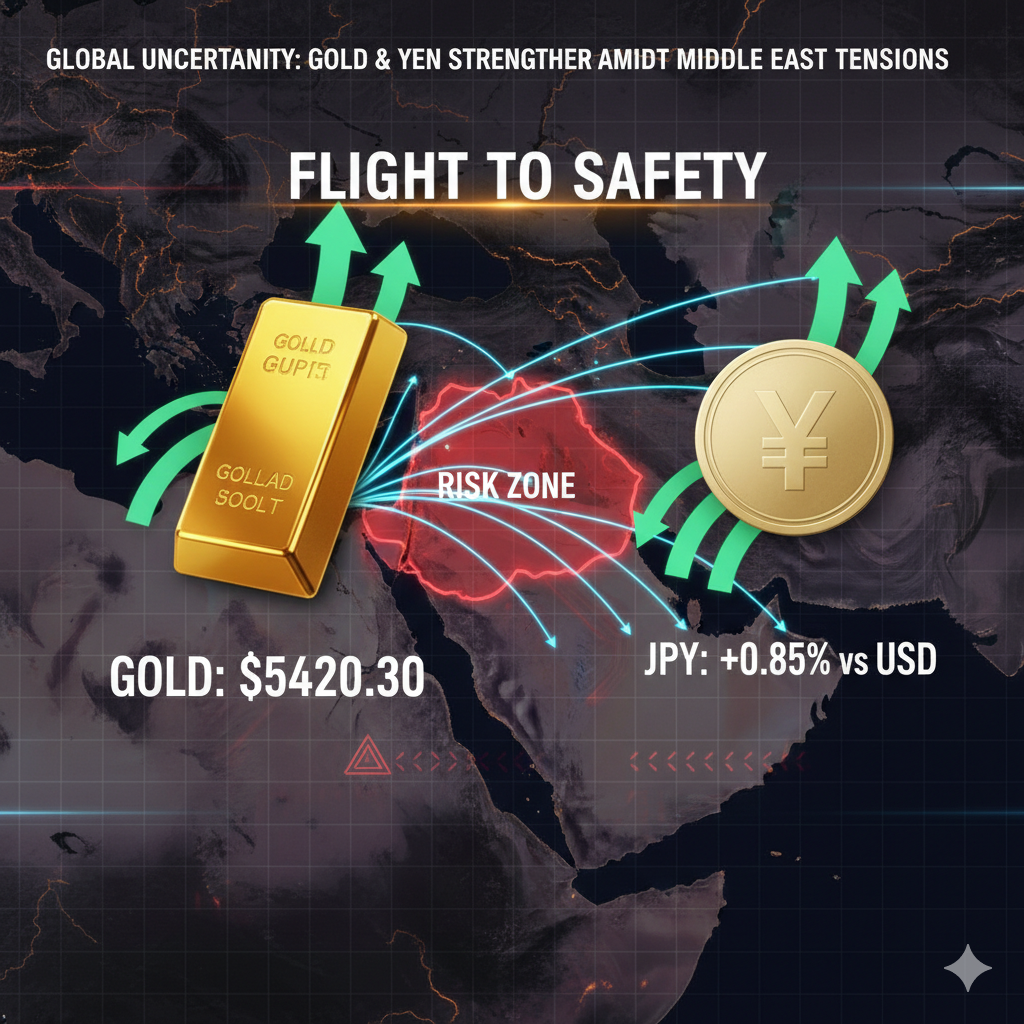
Geopolitical instability in the Middle East has triggered a classic safe haven flight across global financial markets. Investors are rapidly rotating capital away from risk assets and into traditional stores of value. The result? Gold prices have surged to multi-month highs, while the Japanese Yen—the world’s premier funding currency—has strengthened significantly against major peers.
This article analyzes the mechanics of the current safe haven flight, the drivers behind gold and Yen strength, and what traders, portfolio managers, and policymakers should watch next.
Table of Contents
- What Triggers a Safe Haven Flight?
- Gold Jumps: Why Bullion Leads the Rally
- Yen Strengthens: The Currency of Choice in Crisis
- Market Correlations During Geopolitical Stress
- Historical Precedents: Past Safe Haven Flights
- Trading Strategies for Volatile Regimes
- Frequently Asked Questions
What Triggers a Safe Haven Flight?.
A safe haven flight occurs when investors collectively seek assets perceived as low-risk during periods of uncertainty. Key triggers include:
- Geopolitical escalation: Military conflict, sanctions, or diplomatic breakdowns (e.g., Middle East tensions)
- Economic uncertainty: Recession fears, banking stress, or sovereign debt concerns
- Market volatility spikes: Sharp equity selloffs, VIX surges, or liquidity crunches
During a safe haven flight, capital flows typically move: ✅ Into: Gold, Japanese Yen, Swiss Franc, U.S. Treasuries, cash ❌ Out of: Equities, high-yield bonds, emerging market currencies, commodities (excluding gold)
The current Middle East turmoil—marked by escalating rhetoric, military posturing, and supply chain concerns—has activated this playbook. Investors are asking: Where is capital safest right now?
Gold Jumps: Why Bullion Leads the Rally:
Gold has surged over 4% in the past week as the safe haven flight intensifies. Several factors explain why bullion is the primary beneficiary:
Intrinsic Store of Value
Unlike fiat currencies, gold cannot be printed or devalued by central banks. In times of geopolitical stress, investors flock to its timeless appeal as a hedge against systemic risk.
Negative Real Yields Environment
With real yields on U.S. Treasuries remaining compressed, the opportunity cost of holding non-yielding gold stays low. A safe haven flight amplifies this dynamic.
Central Bank Demand
Global central banks—particularly in emerging markets—have been net buyers of gold for consecutive quarters. This structural demand provides a price floor during volatility.
Technical Breakout
Gold’s break above the $2,050/oz resistance level triggered algorithmic buying and short-covering, accelerating the upward move.
Key Levels to Watch:
| Support | Resistance |
|---|---|
| $2,020/oz | $2,100/oz |
| $1,980/oz | $2,150/oz (all-time high test) |
Yen Strengthens: The Currency of Choice in Crisis:
The Japanese Yen (JPY) has appreciated sharply against the USD, EUR, and AUD as the safe haven flightunfolds. Why does the Yen act as a crisis currency?
Carry Trade Unwind
The Yen is the world’s primary funding currency for carry trades (borrowing low-yielding JPY to invest in higher-yielding assets). During risk-off episodes:
- Investors close risky positions
- Repay JPY-denominated loans
- Buy Yen to cover shorts → Yen strengthens
Japan’s External Creditor Status
Japan holds massive net foreign assets. In global stress scenarios, capital often repatriates to Japan, boosting Yen demand.
BoJ Policy Divergence
While other central banks hike rates, the Bank of Japan maintains ultra-loose policy. Paradoxically, this makes the Yen more attractive as a safe haven during flight-to-quality events, as policy normalization fears are priced in gradually.
USD/JPY Technical Snapshot:
123Current: 148.50Support: 147.00 → 145.20Resistance: 150.00 (psychological) → 152.80
A break below 147.00 could accelerate Yen strength as stop-loss orders trigger.
[External Link Suggestion: Link to Bank of Japan policy statement or Reuters FX analysis]
Market Correlations During Geopolitical Stress
During a safe haven flight, traditional asset correlations often break down or invert. Understanding these shifts is critical for portfolio positioning.
Typical Correlation Shifts:
| Asset Pair | Normal Regime | Safe Haven Flight Regime |
|---|---|---|
| Gold / S&P 500 | Low/Negative | Strongly Negative |
| USD/JPY / VIX | Low | Strongly Negative (Yen strengthens as VIX spikes) |
| Oil / Gold | Positive | Divergent (Oil may fall on demand fears; Gold rises) |
| U.S. Treasuries / Equities | Negative | Strongly Negative (Treasuries rally, equities sell off) |
Practical Implication: A diversified portfolio should include explicit safe haven allocations (gold, JPY, Treasuries) that perform when other assets fail.
Historical Precedents: Past Safe Haven Flights:
Examining prior episodes helps contextualize the current safe haven flight:
2022: Russia-Ukraine War Onset
- Gold: +8% in one week
- Yen: +3.5% vs USD
- VIX: Spiked above 35
- Outcome: Markets stabilized after initial shock; gold remained elevated
2019: Strait of Hormuz Tanker Attacks
- Gold: +2.5% on escalation headlines
- Yen: Modest strength, but limited by BoJ intervention fears
- Lesson: Short-lived spikes unless conflict broadens
2008: Global Financial Crisis
- Gold: Initially sold off (liquidity crunch), then rallied +25% in 3 months
- Yen: +15% vs USD as carry trades unwound violently
- Key Insight: Safe haven flight dynamics evolve—liquidity needs can temporarily override safety demand
Current Context: Unlike 2008, today’s safe haven flight is occurring amid sticky inflation and restrictive monetary policy—adding complexity to the gold/Yen rally.
Trading Strategies for Volatile Regimes {#trading-strategies-for-volatile-regimes}
How should investors position for a sustained safe haven flight? Consider these tactical approaches:
For Gold Exposure
- Physical/Digital Gold: Direct ownership for long-term hedging
- Gold Miners ETF (GDX): Leveraged exposure to gold prices (higher beta)
- Gold Call Options: Defined-risk way to capture upside volatility
For Yen Strength
- Long JPY/USD Spot: Direct currency exposure
- Yen-Linked ETFs (e.g., FXY): Accessible via standard brokerage accounts
- JPY Put Options on USD/JPY: Hedge against further Yen appreciation
Portfolio-Level Tactics
- Increase cash allocation: Dry powder to buy dips in risk assets
- Reduce emerging market exposure: EM currencies often weaken during safe haven flight
- Add tail-risk hedges: Long VIX futures or put spreads on equity indices
⚠️ Risk Warning: Safe haven assets can reverse quickly if geopolitical tensions de-escalate. Use stop-losses and position sizing.
Conclusion
The current safe haven flight—marked by gold jumps and Yen strength—is a rational market response to Middle East turmoil. While geopolitical headlines drive short-term volatility, the underlying message is clear: investors are prioritizing capital preservation over yield.
For market participants, this environment demands flexibility. Maintain exposure to traditional safe havens, monitor correlation shifts, and prepare for rapid regime changes. As history shows, safe haven flightepisodes create both risks and opportunities—discipline and preparation separate resilient portfolios from reactive ones.