AI-Driven Inflation: The Hidden 2026 Risk for Investors
As the world barrels toward 2026, investors are laser-focused on familiar macroeconomic threats: interest rate volatility, geopolitical instability, and lingering supply chain fragility. Yet a stealthier, more transformative force is quietly reshaping the global economy—AI-driven inflation. Unlike traditional inflationary pressures rooted in labor costs or commodity shortages, AI-driven inflation stems from the rapid deployment of artificial intelligence across industries, altering cost structures, pricing dynamics, and consumer behavior in ways that standard economic models fail to capture.
This article unpacks the mechanisms behind AI-driven inflation, explores its real-world manifestations already visible in 2025, and explains why it represents a systemic blind spot for institutional and retail investors alike. Most critically, we’ll outline actionable strategies to hedge against—or even profit from—this underappreciated risk before it fully materializes in 2026.
What Is AI-Driven Inflation?
AI-driven inflation refers to price increases triggered not by scarcity or demand-pull forces, but by the strategic use of artificial intelligence to optimize pricing, manage inventory, and personalize consumer offers in real time. Unlike the wage-price spirals of the 1970s or the energy shocks of the 2000s, this new inflation is algorithmic, dynamic, and often invisible to traditional CPI tracking.
At its core, AI-driven inflation emerges from three converging trends:
- Dynamic Pricing at Scale
Companies like Amazon, Uber, and airlines have long used algorithms to adjust prices based on demand, inventory, and competitor behavior. But in 2025, generative AI has supercharged this capability. Retailers now deploy AI models that analyze thousands of variables—including weather forecasts, social media sentiment, local traffic patterns, and even individual browsing history—to set hyper-personalized prices in real time. The result? Consumers pay different prices for identical goods, often without realizing it, and average transaction values creep upward. - Labor Substitution and Wage Compression
While AI automation is often touted as deflationary (by reducing labor costs), it can paradoxically fuel inflation. As AI displaces mid-skill workers in customer service, logistics, and administrative roles, displaced workers flood lower-wage sectors (e.g., hospitality, retail), suppressing wages there. Meanwhile, high-demand AI specialists command premium salaries, widening income inequality. This bifurcation distorts consumption patterns: luxury goods inflate while essentials stagnate, skewing inflation metrics and masking underlying pressure. - AI Infrastructure Costs Passed to Consumers
Training and deploying large language models (LLMs) and multimodal AI systems requires massive capital expenditure—data centers, GPUs, cloud storage, and specialized talent. According to McKinsey, global AI investment surpassed $300 billion in 2025. These costs don’t vanish; they’re embedded into product pricing. From SaaS platforms to smart appliances, “AI-enabled” features often come with 10–30% price premiums. Over time, this premium becomes normalized, lifting baseline prices across entire sectors.
Early Signs of AI-Driven Inflation in 2025
Though still nascent, evidence of AI-driven inflation is mounting:
- Retail: A 2025 MIT study found that AI-powered dynamic pricing increased average e-commerce basket sizes by 12% year-over-year, even as unit sales remained flat.
- Insurance: Auto insurers using AI to assess driver risk now charge premiums that vary by up to 400% for identical policies—based on telematics, location data, and behavioral analytics.
- Healthcare: AI diagnostic tools, while improving outcomes, have added $15–$50 per patient visit in hidden software licensing fees, contributing to rising medical costs.
- Real Estate: AI valuation models (AVMs) used by iBuyers and lenders have begun inflating home price estimates in competitive markets, fueling bidding wars and accelerating appreciation beyond fundamentals.
Critically, these price shifts often evade detection by the Consumer Price Index (CPI), which relies on static product baskets and lags in incorporating digital services. Thus, official inflation readings may significantly understate true cost-of-living increases.
Why Investors Are Overlooking This Risk
Despite its growing impact, AI-driven inflation remains off most investors’ radar for three reasons:
- Misconception of AI as Purely Deflationary
Many economists and portfolio managers still view AI through the lens of productivity gains—assuming automation will lower costs and suppress prices. While true in isolated cases (e.g., manufacturing), the broader economic feedback loops often produce net inflationary outcomes. - Lack of Direct Metrics
There’s no “AI inflation index.” Central banks don’t track algorithmic pricing pressure, and corporate earnings calls rarely disclose AI-related price markups. This opacity makes the phenomenon easy to dismiss. - Short-Term Focus
With election cycles, Fed policy shifts, and recession fears dominating headlines, few are modeling second- and third-order effects of AI adoption on macroeconomic stability.
Yet ignoring AI-driven inflation carries real portfolio risk. Traditional inflation hedges—like TIPS or commodities—may prove ineffective against this form of structural, tech-enabled price drift.
How AI-Driven Inflation Could Reshape Markets in 2026
By 2026, we expect AI-driven inflation to intensify due to:
- Regulatory Lag: Governments are years away from regulating algorithmic pricing transparency.
- AI Democratization: Smaller firms will adopt off-the-shelf AI pricing tools, spreading the practice beyond tech giants.
- Consumer Normalization: As personalized pricing becomes ubiquitous, resistance will fade, enabling further margin expansion.
This environment favors companies that:
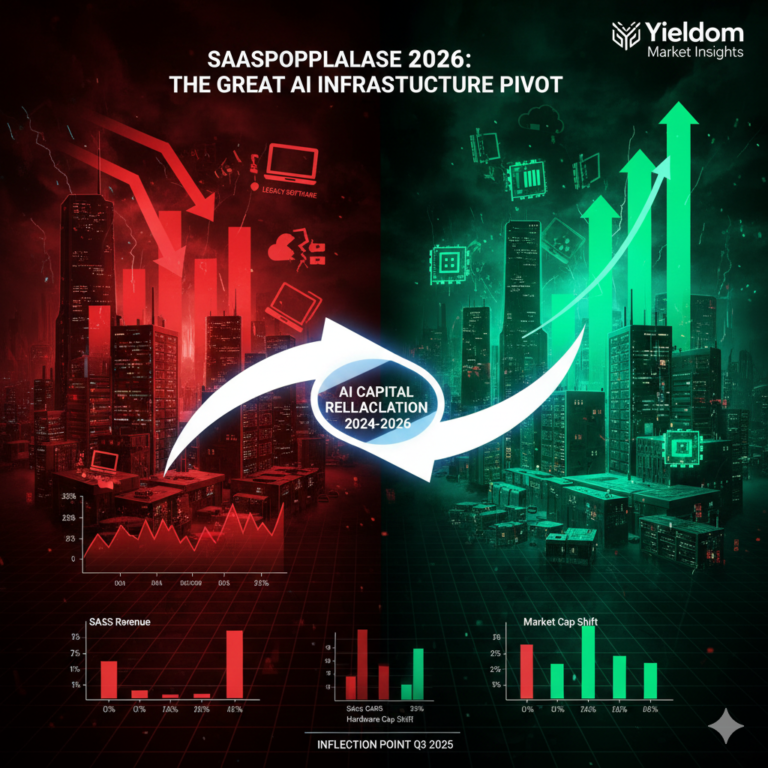
- Own proprietary AI infrastructure (e.g., NVIDIA, Microsoft, Amazon)
- Operate in sectors with inelastic demand (healthcare, utilities, education)
- Use AI to enhance—not just extract—value (e.g., predictive maintenance reducing downtime)
Conversely, businesses reliant on fixed pricing models or undifferentiated products may face margin compression as competitors leverage AI to undercut or upsell dynamically.
Investment Strategies to Navigate AI-Driven Inflation
- Overweight AI Infrastructure Plays
Invest in companies building the “picks and shovels” of the AI era: semiconductor firms, cloud providers, and data center REITs. Their revenue streams benefit directly from AI adoption, insulating them from downstream pricing chaos. - Seek Real Assets with Pricing Power
Farmland, toll roads, and regulated utilities can pass through cost increases more effectively than discretionary retailers. Look for assets with contractual inflation escalators. - Short “AI-Vulnerable” Retailers
Companies with thin margins and no AI capabilities may get squeezed between rising input costs and inability to implement dynamic pricing. Consider short positions or put options. - Demand Transparency in Holdings
Engage with portfolio companies to disclose how AI affects their pricing strategy. Firms that weaponize AI solely for margin extraction may face reputational and regulatory backlash. - Monitor Alternative Inflation Indicators
Track real-time data from sources like credit card aggregators, web-scraped price databases, and mobility apps to detect AI-driven price shifts before they hit CPI reports.
The Bottom Line: Prepare Now, Not Later
AI-driven inflation isn’t science fiction—it’s an emergent economic reality already distorting markets in subtle but significant ways. By 2026, it could become a dominant force in asset allocation, monetary policy, and consumer behavior. Investors who recognize this trend early will be better positioned to protect purchasing power and identify asymmetric opportunities.
The greatest risk isn’t AI itself—it’s the assumption that technological progress automatically equals lower prices. In the age of intelligent algorithms, inflation wears a new mask. And in 2026, it may finally drop the disguise.
Final Thought:
As you evaluate your portfolio for the coming year, ask: Are my investments resilient to a world where every price is fluid, personalized, and optimized for someone else’s profit? If not, it’s time to recalibrate—before AI-driven inflation recalibrates your returns for you.
Read Also:
Inflation Relief 2026: Can These 3 Market Forces Finally Bring Down Prices?
Central Banks Buying Gold at Record Pace as Dollar Credibility Erodes