Trump Trade War Interest Rate Cuts : Risks to Fed Policy & Markets
In this analysis, we break down 3 critical risks that a renewed Trump trade war interest rate cuts scenario poses to Federal Reserve policy, inflation trajectories, and your investment strategy in 2025:
- Inflation reacceleration forcing the Fed to pause cuts
- Market volatility spikes as tariff uncertainty reshapes asset pricing
- Policy conflict between fiscal protectionism and monetary independence
The global economic landscape is shifting beneath our feet. As political winds change in Washington, investors and economists are closely watching the intersection of fiscal policy and monetary authority. The central concern dominating financial headlines is the potential for a renewed Trump trade war interest rate cuts conflict. While the Federal Reserve has signaled a desire to normalize borrowing costs, aggressive tariff policies threaten to reignite inflation, forcing the central bank to keep rates higher for longer.
This comprehensive analysis explores the mechanics of this economic tug-of-war. We will examine how protectionist trade policies interact with monetary tightening, the historical precedents from the 2018-2019 era, and what this means for the average consumer and investor. Understanding the relationship between Trump trade war interest rate cuts is no longer just for economists; it is essential for anyone with a mortgage, a savings account, or a retirement portfolio.
The Current Economic Crossroads
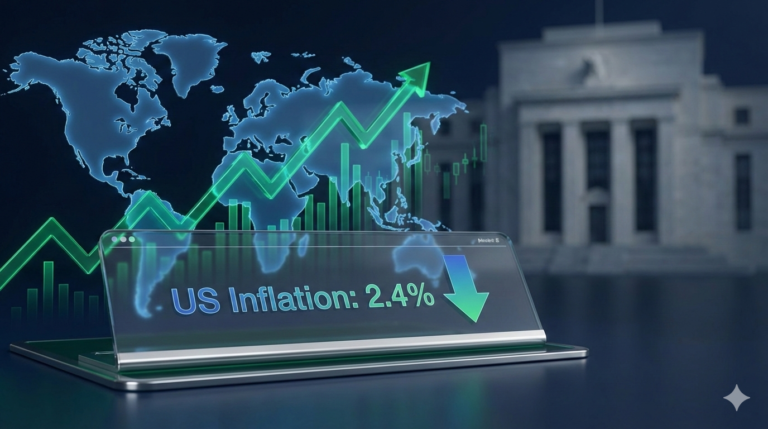
The United States economy is currently navigating a delicate “soft landing” scenario. Inflation has cooled significantly from its post-pandemic peaks, allowing the Federal Reserve to consider easing its restrictive monetary policy. Markets have priced in multiple interest rate cuts over the coming year, anticipating relief for borrowers and a boost for risk assets like stocks. However, this optimistic outlook relies on a critical assumption: that external shocks will remain minimal.
Enter the prospect of renewed trade hostilities. Proposals for universal baseline tariffs and targeted levies on specific nations, particularly China, have moved from campaign rhetoric to potential policy. If implemented, these measures would fundamentally alter the cost structure of the American economy. The core issue is that tariffs act as a supply shock. They raise the price of imported goods, which feeds directly into consumer price indices.
When inflation rises, the Federal Reserve’s mandate compels them to act. Their dual mandate requires price stability and maximum employment. If price stability is threatened by trade policy, the Fed cannot proceed with Trump trade war interest rate cuts as planned. Instead, they may be forced to pause or even reverse course. This creates a friction point between the executive branch’s fiscal agenda and the central bank’s monetary goals.
Market Expectations vs. Policy Reality
Financial markets are forward-looking mechanisms. Currently, bond yields and futures markets suggest a high probability of rate reductions. Investors are betting on a benign inflation environment. However, the introduction of significant tariffs introduces a variable that models may not fully account for.
If the market realizes that inflation will be structurally higher due to trade barriers, we could see a violent repricing of assets. Treasury yields could spike, mortgage rates could climb, and equity valuations could compress. The narrative of Trump trade war interest rate cuts is essentially a bet on whether the Fed will prioritize fighting inflation or supporting growth in the face of political pressure. Historically, the Fed prioritizes inflation control, which suggests that rate cut hopes may be overly optimistic.
Understanding the Mechanics of Tariffs and Inflation
To understand why a Trump trade war interest rate cuts scenario is problematic, one must understand the transmission mechanism of tariffs. A tariff is a tax on imports. When the US government places a tariff on goods from another country, the importer of record—usually a US-based company—pays that tax to US Customs and Border Protection.
The Pass-Through Effect
Companies rarely absorb these costs entirely. To maintain profit margins, businesses pass the cost on to consumers. This is known as the pass-through effect. For example, if a 20% tariff is placed on electronics manufactured abroad, the retail price of those electronics in the US will likely rise. This increase is recorded in the Consumer Price Index (CPI) and the Personal Consumption Expenditures (PCE) index, which are the primary gauges the Federal Reserve uses to measure inflation.
Economists estimate that a universal 10% tariff could add anywhere from 0.5% to 1.5% to the overall inflation rate. While this might sound small, the Fed targets a 2% inflation rate. If underlying inflation is already hovering near 2.5%, adding tariff-induced inflation pushes the economy well above the comfort zone. This forces the central bank to maintain restrictive interest rates to cool demand and offset the price hikes.
Supply Chain Disruptions
Beyond direct costs, trade wars create uncertainty. Businesses hesitate to invest in capital expenditure when they do not know what the trade rules will be in six months. This can lead to supply chain inefficiencies. Companies may rush to stockpile inventory before tariffs hit, creating artificial demand spikes. Conversely, they may scramble to find new suppliers, which is a costly and time-consuming process.
These inefficiencies reduce economic productivity. When productivity falls and costs rise, we encounter “stagflationary” pressures. This is the worst-case scenario for a central bank. In a stagflationary environment, cutting interest rates to boost growth could worsen inflation, while raising rates to fight inflation could worsen growth. This dilemma complicates the Trump trade war interest rate cuts discussion significantly, leaving the Fed with very few good options.
Historical Precedent: The 2018-2019 Trade War
We do not have to speculate entirely on the effects of trade conflicts; we have recent history to guide us. During the first Trump administration, the US engaged in a significant trade dispute with China and imposed tariffs on allies regarding steel and aluminum. Analyzing this period provides valuable insights into what might happen again.
Fed Response in 2019
In 2019, the Federal Reserve actually cut interest rates. However, the context was different. Inflation was well below the 2% target at that time, giving the Fed room to maneuver. The rate cuts were described as a “mid-cycle adjustment” to insure against the risks posed by the trade war slowing down global growth.
Today, the context is inverted. Inflation has been the primary enemy of the economy since 2021. The Fed spent 2022 and 2023 aggressively raising rates to combat it. If a new trade war begins now, with inflation memories still fresh, the Fed will be much more hawkish. They will be less willing to cut rates to offset trade war damage because they fear unanchoring inflation expectations. This distinction is crucial for understanding the current Trump trade war interest rate cuts risk profile.
Impact on Manufacturing and Agriculture
During the previous trade war, the US manufacturing sector entered a recession. Tariffs raised input costs for factories, while retaliatory tariffs from other countries hurt US exporters, particularly in agriculture. The government had to step in with subsidies to support farmers.
If similar policies are enacted now, we could see renewed stress in the industrial sector. However, the labor market is currently tighter than it was in 2018. Wage growth is stronger. If tariffs push prices up and wages remain sticky, we could see a wage-price spiral. This is the scenario that keeps Federal Reserve officials awake at night. It would necessitate keeping interest rates high to break the spiral, directly undermining hopes for rate relief.
The Federal Reserve’s Dilemma
Jerome Powell and the Federal Open Market Committee (FOMC) prize their independence. However, they operate within an economy shaped by fiscal policy. When fiscal policy (taxes and spending) becomes inflationary, monetary policy (interest rates) must become restrictive to compensate.
The Neutral Rate of Interest
Economists often talk about “r-star,” or the neutral rate of interest. This is the theoretical rate that neither stimulates nor restrains the economy. If trade wars make the economy less efficient and more inflationary, the neutral rate of interest likely rises.
If the neutral rate moves from 2.5% to 3.5%, then a federal funds rate of 4% is not actually restrictive; it is barely neutral. This means the Fed would have to raise rates much higher than currently anticipated to actually slow the economy down. For the investor hoping for Trump trade war interest rate cuts, this implies that the “terminal rate” (the peak of the cycle) might not have been reached, or that rates will simply plateau at a higher level for years.
Credibility and Inflation Expectations
The Fed’s most powerful tool is its credibility. If the public believes the Fed will allow inflation to run hot due to political pressure, inflation expectations become unanchored. Once workers and businesses expect higher inflation, they build it into wage contracts and price settings, making inflation a self-fulfilling prophecy.
To prevent this, the Fed may need to be more aggressive than the data suggests. They might keep rates high even if growth slows, to send a signal that they are committed to the 2% target. This “higher for longer” stance is the direct antagonist to the Trump trade war interest rate cuts narrative. The central bank may feel compelled to prove that political tariffs will not dictate monetary looseness.
Global Economic Ripple Effects
The US economy does not exist in a vacuum. A renewed American trade war would trigger retaliatory measures from trading partners. The European Union, China, and other nations have already prepared contingency plans for potential US tariffs.
Retaliatory Tariffs and Export Slowdown
When other countries retaliate, they target politically sensitive US industries. Agriculture, automotive, and technology are common targets. This reduces US exports, which is a component of GDP. A slowdown in exports drags on economic growth.
Normally, a growth slowdown would prompt rate cuts. However, if the slowdown is accompanied by tariff-induced inflation (stagflation), the Fed is handcuffed. They cannot cut rates to help exporters because doing so would worsen the inflation caused by the initial tariffs. This global dynamic reinforces the risk that Trump trade war interest rate cuts will be delayed or canceled entirely.
Currency Fluctuations and the Strong Dollar
Trade wars often lead to currency volatility. Initially, tariffs might strengthen the US dollar because imports decrease, reducing the supply of dollars sold on the foreign exchange market. Additionally, if US interest rates remain higher than those in Europe or Asia due to inflation fighting, capital will flow into the dollar seeking yield.
A strong dollar sounds good, but it hurts US multinational corporations. It makes their goods more expensive abroad, further hurting exports. It also puts pressure on emerging markets that hold debt in dollars. If the dollar becomes too strong, it can cause financial instability globally, which eventually circles back to hurt the US financial system. The Federal Reserve monitors the dollar closely, and excessive strength can act as a tightening of financial conditions, sometimes doing the Fed’s work for them. However, relying on currency strength to fight inflation is a blunt instrument and adds another layer of complexity to the Trump trade war interest rate cuts equation.
Sector-Specific Risks and Opportunities
Investors need to look beyond the macro picture and understand how specific sectors will react to the interplay of tariffs and interest rates. Not all industries will suffer equally, and some may even benefit from protectionist policies.
Technology and Consumer Electronics
The technology sector is highly dependent on global supply chains. Components are sourced from Asia, assembled in various locations, and sold globally. Tariffs on Chinese manufacturing would directly hit companies like Apple, Nvidia, and Dell.
Higher costs for these companies could lead to lower margins or higher prices for consumers. If demand drops due to higher prices, earnings estimates will fall. Furthermore, tech stocks are “long-duration assets,” meaning their valuations are sensitive to interest rates. If the Trump trade war interest rate cuts hope vanishes and rates stay high, tech valuations face a double whammy: lower earnings potential and higher discount rates.
Domestic Manufacturing and Steel
On the flip side, domestic producers of steel, aluminum, and heavy manufacturing might benefit from tariffs on foreign competitors. Protectionism is designed to shield these industries. If the goal is to bring manufacturing back to the US, these sectors could see increased investment.
However, the benefit is often offset by the cost of inputs. A US car manufacturer might be protected from foreign cars, but if the steel they need to build the car is more expensive due to tariffs, their competitiveness is still compromised. Additionally, if interest rates remain high to fight the inflation caused by those steel tariffs, the cost of borrowing to build new factories becomes prohibitive. Therefore, even the intended beneficiaries of the trade war may find the Trump trade war interest rate cuts environment hostile to expansion.
Real Estate and Housing
The housing market is the most interest-rate-sensitive sector in the economy. Mortgage rates track the 10-year Treasury yield. If inflation fears keep bond yields elevated, mortgage rates will remain in the 6% to 7% range or higher.
This locks homeowners into their current low-rate mortgages, reducing inventory. It also prices out first-time buyers. A trade war that keeps rates high exacerbates the affordability crisis. There is no silver lining for real estate in a scenario where Trump trade war interest rate cuts are off the table. Commercial real estate faces similar risks, particularly if higher rates trigger loan defaults on office buildings that are already struggling with remote work trends.
Investor Strategies for a High-Rate, High-Tariff Environment
Given the risks outlined above, how should investors position themselves? The era of cheap money and frictionless trade may be pausing. Portfolios need to be resilient against inflation and sticky interest rates.
Focus on Quality and Cash Flow
In a high-interest-rate environment, debt is expensive. Companies with strong balance sheets and low debt loads are preferable. Look for businesses that generate significant free cash flow. These companies can fund their own growth without needing to borrow at high rates. They are also more likely to sustain dividends, which become more attractive when bond yields are high.
Avoid highly leveraged companies, especially in interest-rate-sensitive sectors like utilities or speculative tech. The risk of refinancing debt at much higher rates could lead to credit distress. In the context of Trump trade war interest rate cuts, capital preservation becomes more important than aggressive growth chasing.
Inflation Hedges
If tariffs drive inflation, assets that historically perform well during inflationary periods should be considered. Commodities, energy stocks, and real assets (like infrastructure) can act as hedges. These sectors often have pricing power, meaning they can pass higher costs on to consumers without losing demand.
Treasury Inflation-Protected Securities (TIPS) are another instrument to consider. Unlike nominal bonds, the principal value of TIPS adjusts with inflation. If the trade war sparks a price surge, TIPS can protect the purchasing power of the fixed-income portion of a portfolio. This is a direct hedge against the failure of Trump trade war interest rate cuts to materialize.
Diversification Beyond the US Dollar
While the US dollar may strengthen initially, long-term trade fragmentation can weaken the dominance of the dollar. Diversifying into international markets, particularly those less exposed to US tariff policies, might reduce risk. However, this is tricky, as a global trade war hurts everyone. Emerging markets with strong domestic consumption and low reliance on exports to the US might offer relative safety.
The Political Economy of Monetary Policy
It is impossible to discuss this topic without addressing the political pressure on the Federal Reserve. Historically, Presidents prefer lower interest rates, as they stimulate the economy in the short term, leading to better election outcomes.
Fed Independence Under Scrutiny
There is ongoing debate about whether the Federal Reserve will remain independent if faced with a trade war that slows growth. If the economy stalls due to tariffs, political pressure to cut rates will be immense. However, if the Fed caves to political pressure and cuts rates while inflation is rising due to tariffs, they risk losing credibility.
A loss of credibility could lead to a bond market revolt, where investors demand much higher yields to hold US debt, fearing inflation will run out of control. This would force rates up regardless of what the Fed does. Therefore, the Fed is likely to resist political pressure to ensure the Trump trade war interest rate cutsnarrative doesn’t become a reality at the expense of price stability.
Fiscal Dominance Risks
“Fiscal dominance” occurs when government debt levels are so high that the central bank is forced to keep rates low to help the government service its debt. The US debt-to-GDP ratio is historically high. If a trade war slows growth, tax revenues fall, and deficits widen.
This creates a dangerous feedback loop. Higher deficits require more bond issuance. If the Fed doesn’t buy those bonds (quantitative easing), yields rise. If yields rise, debt service costs explode. The Fed might be forced to keep rates lower than inflation warrants to prevent a fiscal crisis. This is a nuanced risk within the Trump trade war interest rate cuts discussion: rates might not be cut for growth, but they might be capped to prevent a debt spiral.
Long-Term Structural Implications
Beyond the immediate market volatility, a renewed trade war combined with high interest rates could alter the long-term trajectory of the US economy.
Reduced Potential Growth
Economists measure “potential growth” as the rate at which an economy can expand without triggering inflation. Trade barriers reduce efficiency. When countries specialize in what they are best at and trade freely, global wealth increases. When trade is restricted, resources are misallocated.
Over a decade, reduced efficiency means lower potential GDP growth. If the US economy can only grow at 1.5% instead of 2.5% without causing inflation, then interest rates will structurally need to be lower in the very long run, but only after a painful period of adjustment. In the medium term, however, the transition to a protectionist model is inflationary. This suggests a volatile path for the Trump trade war interest rate cutstimeline.
Reshoring and Capital Expenditure
One argument for tariffs is that they will encourage “reshoring,” or bringing manufacturing back to the US. This would require massive capital expenditure. Building factories is capital intensive. If interest rates are high, the cost of financing these new factories is high.
Therefore, there is a contradiction in the policy mix. You cannot encourage massive industrial investment through protectionism while simultaneously maintaining high interest rates that make borrowing for that investment expensive. For reshoring to work, the government might need to offer subsidies to offset the high cost of capital. This further increases the deficit, circling back to the fiscal dominance risk mentioned earlier.
Conclusion: Navigating the Uncertainty
The intersection of trade policy and monetary policy is one of the most critical economic stories of the coming years. The hope for Trump trade war interest rate cuts is currently priced into many asset classes. If that hope is proven false, the market correction could be significant.
Investors, business leaders, and consumers must prepare for an environment where inflation is stickier and interest rates are higher than the post-2008 norm. The Federal Reserve will likely prioritize its inflation mandate over political desires for growth, especially if tariffs reignite price pressures.
While a trade war aims to protect domestic industry, the collateral damage includes higher borrowing costs and reduced purchasing power. The path forward requires vigilance. Monitoring CPI reports, Fed meeting minutes, and tariff implementation timelines will be essential. The era of easy money may be ending, not because the economy is too hot, but because trade policy is making it too expensive.
In summary, the risk that a Trump trade war interest rate cuts scenario will fail to materialize is substantial. Prudent financial planning should account for the possibility of rates remaining restrictive for an extended period. Diversification, focus on cash flow, and inflation protection are the key takeaways for navigating this complex macroeconomic landscape.
Frequently Asked Questions (FAQ)
Will the Federal Reserve cut rates if a trade war causes a recession?
Ideally, the Fed cuts rates during a recession. However, if the recession is caused by tariffs that also cause inflation (stagflation), the Fed may be hesitant to cut rates aggressively. They may prioritize fighting inflation over stimulating growth, delaying Trump trade war interest rate cuts.
How do tariffs affect mortgage rates?
Tariffs can increase inflation expectations. When inflation expectations rise, bond yields typically rise. Mortgage rates track bond yields. Therefore, tariffs can indirectly cause mortgage rates to stay higher for longer.
What sectors perform best during a trade war?
Domestic-focused companies with low exposure to international supply chains often perform better. Defense, utilities, and domestic manufacturing may see relative strength. However, high interest rates can negate some of these benefits by increasing borrowing costs.
Is the US dollar likely to strengthen during a trade war?
Initially, yes. Reduced imports and higher interest rates tend to strengthen the currency. However, long-term trade fragmentation can undermine confidence in the dollar as the global reserve currency, potentially weakening it over a longer horizon.
How can I protect my portfolio from trade war inflation?
Consider allocating assets to commodities, TIPS (Treasury Inflation-Protected Securities), and companies with strong pricing power. Reducing exposure to long-duration growth stocks and high-debt companies is also a common strategy when Trump trade war interest rate cuts are uncertain.
Disclaimer: This article is for informational purposes only and does not constitute financial advice. Always consult with a qualified financial advisor before making investment decisions.